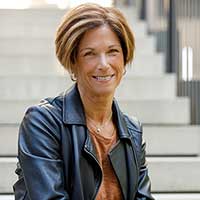
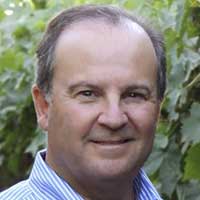
0:00:01 Vonnie Estes: Welcome to Fresh Takes on Tech, the podcast exploring what’s next in food and agriculture through the lens of innovation and technology. Hosted by Vani Estes, each episode features conversations with people driving change in the produce industry. From entrepreneurs to scientists to industry leaders and policymakers, this isn’t about hype. It’s about real conversations with people who are making a difference.
0:00:24 Vonnie Estes: Let’s get into it. Hello and welcome to Fresh Takes on Tech. I’m your host, Vani Estes, and today we’re diving into one of the most exciting intersections of science, innovation, and fresh produce. I’m joined by two leaders who have helped reshape what the future of produce can look like. David Margulis, Executive Chair of Sun World International, and Tom Adams, CEO of Pairwise. This year at the Global Produce and Floral Show, Sun World and Pairwise received the Science and Technology Circle of Excellence Award.
0:00:56 Vonnie Estes: This is an honor given by IFPA to organizations applying science, technology and engineering to advance the produce industry. This award recognizes companies that don’t just innovate for innovation’s sake, but apply technology to create real improvements in flavor, sustainability, grower profitability, and consumer experience. Sun World and Pairwise earned it through a powerful partnership blending advanced breeding technologies with decades of commercialization experience.
0:01:27 Vonnie Estes: Today, we’re going to talk about their collaboration, their shared vision for the future, and what the adoption opportunities and challenges they see across the produce industry. So welcome, David and Tom. This is one of my favorite topics and two of my favorite people, so I’m really looking forward to this conversation with you.
0:01:45 David Marguleas: Thank you, Melanie.
0:01:47 Vonnie Estes: So, David, I’d like to start with you. Sun World and Carewise received a Circle of Excellence award this year. What did that recognition mean to you and your team?
0:01:57 David Marguleas: Well, first of all, we were particularly honored by the award given that it married two fairly disparate capabilities, but certainly complementary ones that neither one of us could have accomplished on our own individually. It was a recognition of Pairwise’s leadership in the molecular gene editing world, where it stands as a leader in adapting varieties and specific traits using molecular breeding technologies that really bode well for crops that we have identified as benefiting from the application of those technologies.
0:02:44 David Marguleas: And it married those capabilities with Sun World’s own plant breeding expertise, as well as our five decades of history as a fresh produce company, introducing novel crops and novel trades to consumers around the world.
0:03:01 Vonnie Estes: Excellent. Yeah, it was great to have you at the show, and we really wanted to honor the collaboration, as you said, of these two different skill sets.
0:03:13 Tom Adams: I was just going to chime in that I Wish I could have been there. It was quite. Quite a. Quite an honor for Pairwise. So really honored by. By getting it. I did receive it in the mail the other day, and it’s.
0:03:23 Vonnie Estes: Oh, good. I’m good.
0:03:24 Tom Adams: It’s on the shelf in a place of honor at our facility here in Durham. So really appreciate it. And the recognition from IFPA about the importance of this collaboration and what it can do for produce, I think is really meaningful.
0:03:39 Vonnie Estes: Thank you. Yeah, I’m really happy.
0:03:41 David Marguleas: I particularly enjoyed the photo of me representing both Pairwise and Sun World, along with Max, who was misidentified in a number of news articles that followed as being Tom Adams. So the younger trapping version of Tom appeared in many trade publications.
0:04:06 Tom Adams: That’s why I’ve been getting all these notes about how I was looking a lot better.
0:04:09 David Marguleas: Exactly.
0:04:11 Vonnie Estes: That’s very funny. Okay, Tom, turning to you, can we talk about how this partnership between Pairwise and sunworld came together and what made this the right moment for this collaboration?
0:04:25 Tom Adams: Yeah, I think there’s a couple of things that happened, and Pairwise, we’ve really adjusted our business strategy where we really are looking for partners like SunWorld because we recognize the value of the distribution networks they have. So we were. We’ve been successful, and I know we’re not talking about BlackBerries today, but we’ve been successful with a couple of important edits and blackberries, including removing the pit from the. The druplet in the back. BlackBerry really is the prelude to being able to remove the pit in a cherry. So we were actually at a dinner a couple of years ago.
0:05:00 Tom Adams: I happened to be seated next to David, and we were discussing a little bit some of the progress we made. And, you know, I think we both shared the idea that it’s time to get together and try to create a pitless cherry, which I think we’re on our way to do.
0:05:13 Vonnie Estes: Wow, that’s exciting. And we can talk about blackberries too. So I think I’m so close to this, and I’ve been watching these developments for so long that I feel like I may be skipping over the people that might be listening that are talking about that wonder, like, what is this that you’re trying to do and what’s the technology and how is this different? So, Tom, why don’t you give a. Just an overview of kind of your technology and how and what the benefit of doing breeding the way that you’re doing it is?
0:05:43 Tom Adams: Yeah, I think that, you know, CRISPR technology has been around for a little more than 10 years now. And it’s basically a adaptation where we’re able to do very precise changes within the genome. So it differs from gmo. Rather than bringing in traits from other organisms, you’re actually working within the same genetics that Mother Nature works with, typically doing things that already exist. They just need to be brought together. So it allows you to do something like identify some genes that are involved in making the pit and remove them. So it’s not adding something, that’s removing a gene and, and then you remove the pit. And it gives a very precise way of doing that.
0:06:20 Tom Adams: Couples with breeding really well because you still have 30,000 other genes that you need to be segregating to create great flavors, great yields, et cetera, and being able to combine them together, I think you create, you know, pipeline of different, different things that, that is much more efficient. I think there’s some mutations out there, for instance, that could probably be bred to get to a pitless cherry.
0:06:41 Tom Adams: Probably take you a hundred years of backcrossing, et cetera, to have a good cherry. But we can do that in a few years. And again, coupling with a breeding program like what Sun World has, I think you can then expand its, its use.
0:06:54 Vonnie Estes: A little known fun fact about me is I did my thesis work on cherries at Davis. Yeah, I know it’s been a while. One of the things that I really working in the cherry industry in the Central Valley, and this is true wherever cherries are grown, when, when cherries are ripe, they are ripe and everyone’s, you know, fighting for the same resources to get them harvested and to get them into the pack plants. And it, it’s such a compressed short period of time.
0:07:23 Vonnie Estes: Can you do something about that? Is that one of the traits that you’re looking at of kind of elongating or different varieties that kind of come ripe at different times in the same region?
0:07:32 Tom Adams: Yeah, I think that that could be, that could be something that to consider. I’m not sure that you really want to change that because it also makes it very efficient to pick because you just go through to pick once, which I think you might not mind doing with some other fruits to make it so you don’t want to. But if you could stagger the ripening so that they’re not all ripe at the same time, which I think is definitely approachable. And even on our path towards making the bitless cherry, I’ll tell you, we’ve already changed the, some of the environmental responses for flowering so that we’re.
0:08:03 Tom Adams: We’re making cherries, we’re making, we’ve essentially made cherry trees into primocane cherries. So new wood is creating cherries on it. So you make cherries. I mean, the first thing to do if you’re going to make a pitless cherry is to make cherries faster so that you could test your genes. And we’ve already done that. And that, I think, starts setting up the idea that you might make cherry trees that are really more like a bush that you could grow underneath house like a. Like a blueberry and not have to worry about rain on it, et cetera. That’s not the core of what we’re doing, but it might be the sort of thing that’ll come out of the work we’re doing together.
0:08:36 David Marguleas: I think that’s also where that combination of capabilities is going to yield huge gains for the produce industry. We can effectively take an edited variety and create multiple edited varieties, much like we’re doing in our classical breeding work to develop a line of cherries that are available from the early growing regions with the characteristics that are often found in parts of Queensland, Australia, the Coachella Valley and Southern San Joaquin Valley of California, the northern parts of Chile and elsewhere, and then develop some higher chill varieties that can be grown over the course of the following six or eight weeks. And we think there’s an opportunity to apply the wonderful work that Pairwise is doing to create that pit list product across an entire line of crops, much like we’ve done with stone fruit and table grapes.
0:09:45 David Marguleas: And more recently with, we’re starting a mango breeding program that has the same opportunities to create a line of varieties that are available over a longer period of time. That creates efficiencies for the grower, for the packing house, for the retailer, and certainly enhances the accessibility and availability of the varieties for consumers.
0:10:11 Vonnie Estes: So, David, we first started talking about gene editing. I think it’s been at least 10 years ago, maybe more than it was. Wrong time, wrong company. Just the time had not come yet. So besides Pairwise being so great, why did you decide to pursue this concept now and why is this the right time?
0:10:31 David Marguleas: A couple of reasons. Number one, we recognize the capabilities that Tom and his team have as being really special. And in particular, working with perennial specialty crops like cherries and. And berries and other other fresh fruit items. I think the second compelling item for us, or reason for us to. To embrace this joint venture has to do with the fact that it fit perfectly in our. Our efforts to introduce convenience traits in the fresh produce industry.
0:11:11 David Marguleas: So you’ll recall that we introduced the seedless watermelon to the American consumer in the late 1980s. We’ve had a string of seedless table grapes, including some of the first seedless varieties introduced many years ago. More recently, introducing seedless mandarins on behalf of a number of breeders around the world that today comprise a number of the branded lines of mandarins that one sees in the produce department, as well as the introduction, more recently of seedless lemons that came from our program acquired, that we acquired from the Biogold Group last year.
0:11:51 Vonnie Estes: Love those.
0:11:52 David Marguleas: And then if you think about the opportunities and you close your eyes and you dream a little bit and you start to think about, beyond removing the pits in cherries, all of the other crops that would be. That would benefit from the same technology and the same convenience interests that consumers have with the seed in mangoes and the pit in avocados and the pit in stone fruit, you start to think about the real opportunities to change the face of the produce department.
0:12:25 Vonnie Estes: Excellent. So, Tom, I have seen so many collaborations that you’ve been getting into recently. Every time I open up LinkedIn, it’s like another great collaboration. And so it seems like. I don’t know if this is just as the company matures or what, what’s happening in your business strategy and. And your work, that there’s all these different collaborations popping up that are really going to help agriculture and produce overall.
0:12:52 Tom Adams: Yeah, I mean, maybe to step back there, first, there’s sort of two levels of collaborations. There’s the really deep relationship like we have with sunworld, and then we are broadly licensing the technology that we’ve developed. And I think we didn’t exactly set out to do it, but over the last couple of years, we were able to develop a CRISPR system that’s pretty all encompassing in terms of the types of capabilities that you can use for changing things. And it’s actually outside of some of the foundational IP in the CRISPR space. So it’s really proprietary to Pairwise.
0:13:26 Tom Adams: And we made the decision that, you know, one of our missions is to make food easier to grow and easier to eat are one of the ways we like to express Earth, and that we could do that a lot better if we let everybody do it. So we’ve made it pretty easy for people to license these tools from us. So we’re really trying to. I don’t know if it’s still the right analogy, but we sort of see the fulcrum inside as, you know, compared to.
0:13:51 Tom Adams: I don’t know if it’s intel anymore. Maybe it’s Nvidia inside. But the.
0:13:54 Vonnie Estes: Yeah, exactly.
0:13:56 Tom Adams: Fulcrum inside idea that, you know, if you get everybody using Fulcrum, make it easy and there’s lots of different places that we’re just not going to be able to apply, you know, do do the work ourselves, but other people can develop the traits there. So that’s why you’re seeing so many. And I think again, we’ve created a pretty strong tool set. You know, it’s demonstrated by the type of partnerships that we have, how strong it is when Corteva is on. And Bayer and many other partners that, you know, have access to other tools as well, wanted to get on the Fulcrum platform, I think is a demonstration of how valuable it is. So other parties. Now the other thing that’s happening is you see some of the European companies stepping up now, like we just did Enzoaden recently, and that’s, I guess just last Friday, whatever they call the Trilateral Commission came up with their, what hopefully will be the final set of rules that just need to be voted on now by the nation. So they finally came with the unit in Europe, the unified thing in Europe, which is, you know, huge to start opening up. And it’s a, you know, it could be a little bit more open, but, but it’s, it’s a great start towards, towards what regulations can be and really drive a global regulatory path for these products.
0:15:14 Vonnie Estes: Yeah, it makes such a huge difference. I mean, David and I talked about this 10 years ago. So right then there, there was. Europe was completely closed. There was no way they were accepting it at that point. And so I remember David saying, if I, if I can’t sell into Europe, you know, if I have to keep everything separated, this doesn’t make sense. And so that finally things are really starting to line up. So I have a question, just number of questions for what you said, but in talking about your Fulcrum platform, I mean Corteva specifically has a ton of IP in gene editing.
0:15:46 Vonnie Estes: What is it about Fulcrum that is of interest to them? So it’s not the IP or the technology per se, it’s the platform. So what are you doing differently?
0:15:55 Tom Adams: So one of the things that we, early on, when we were licensing technology, we licensed the base editing technology out of David Liu’s lab at Harvard, which allows you to do much more refined changes rather than just what normal. What most CRISPR technology is scissors and cutting DNA, hoping it comes back together the right way. So with base editing you can make very precise changes. And because of that, we ended up spending A fair bit of time developing these tools that enable different types of editing.
0:16:25 Tom Adams: So we’ve got a whole suite of things that go from a scissor to the base editing, and also some of the templated editing tools that Prime Medicine is based on, really a pretty complete set. And again, they are optimized for plants. So much of the crispr work goes on to optimize for humans and plants. There’s even some advantages to not being as precise as you need to be in humans, since you want to make variation around some of these genes. So I think it’s just seen as a really good set of tools. And, yeah, Corteva is clearly putting a big play into gene editing overall, and I think they see it fitting into their platform. And I think if you talk to Sam Ethington, he likes to say that he saw it as one and one equals three. And I. I like to think that’s true.
0:17:12 Vonnie Estes: That’s really amazing. Just to think about how far things have progressed and how important collaboration is and to have these companies working together where at the beginning of the Crisper Diaries, it was a lot more competitive and. And people weren’t working together. So. I’d love to hear that.
0:17:29 Tom Adams: Yeah. And that’s been our. Our belief as a. As a smaller company in the space that the. And it’s a technology that should be used by everybody. But the we partnership is.
0:17:41 David Marguleas: There’s.
0:17:42 Tom Adams: It’s very complicated to bring a product to market, and we certainly got an education in that when we brought the conscious greens to market. Having partners, again, like Sun World who know how to bring genetics to growers, that. That just cuts a lot of the. A lot of the risk out of the whole program.
0:17:58 Vonnie Estes: Yeah. Like David said, with five decades, like, you’re never catching up, you know, so having a company like SunWorld to work with in their genetics is so powerful.
0:18:08 David Marguleas: Yeah. I think the other. The other aspect that we haven’t touched on is the reason that commercialization is so viable for this project in particular, is the fact that we have about 4,000 growers in 18 countries that are growing a wide range of crops that we’ve bred or that we represent other breeders with. And so the opportunity to introduce a pitless cherry more quickly over a much broader space in a number of countries is really critical to the launch of this venture.
0:18:46 David Marguleas: And then the regulatory hurdles that Tom spoke to with regard to Europe and more recently the United Kingdom and a number of other geographies is going to do nothing but catapult this kind of technology. And our Licensed growers, willingness to, to, to grow these edited crops given the reception that we anticipate them having in the marketplace.
0:19:13 Vonnie Estes: So this is something, you know, we’ve all talked about in produce, trying to get, you know, I’ve been working on this since I’ve been at IFPA and trying to really get acceptance and pull through of, of gene edited. And what, what everyone has been saying is that if you give consumers something that they want, you know, the barriers really start coming down. And that’s what you guys are focusing on is really finding consumer traits, you know, like this that consumers really want.
0:19:39 Vonnie Estes: But we were, you know, I was having conversations with retailers and the retailers were saying, no, we’re not going to carry this. And they said, consumers don’t want it. And so it’s really, you know, and I, and I said this several years ago. You know, people were saying, well, asking me, well, how do you think this change is going to come about? And I said, we’re going to develop something consumers want.
0:19:57 Vonnie Estes: And then the rest of it kind of falls away. So how do you guys see the changes, especially in Europe and in different places. What do you still think we’re still going to have consumer barriers? Are we going to have to tell people that it’s being gene edited? And what the, what will the response be?
0:20:14 Tom Adams: We think it’s really important to be transparent that technology was involved. And I think somebody told me early on that you can only be transparent before people ask. So I think it’s really important. That said, I think the, the, the approach to that because we are going to market through, through partners. And even with Sun World, you’re going to go through different, different people’s brands besides just the Sun World brand that you need to work with your partners to get the right way to do it. So I think that’s, that we’ll see those, those things play out. But I, I think you lead with the benefits that you’re giving the consumer and don’t hide the fact that technology was used because people will call you out on that and I think we’ll be very successful.
0:20:56 David Marguleas: Yeah, we would agree wholeheartedly. And while we’re not in the business of bringing fresh produce to market in the way we were for many decades, we’re very cognizant of the commercial marketplace and the sensitivities that a number of markets have to technology. We’ve been using classical breeding methods for a number of years, many years, as have other breeders. We’ve started to introduce marker assisted breeding and a number of Other molecular tools and the pairwise technologies are just another step forward in being able to address specific traits ideally that are consumer facing and important to consumers, like the convenience traits of pitless cherries.
0:21:48 Tom Adams: And just to build on that, we do have our blackberries now in the field and we’re seeing a lot of enthusiasm both from growers and from consumers, both for a high yielding, high density BlackBerry we’ve created. Nobody’s going to complain about getting 50% higher yield or more seasons in a year. And the, the seedless ones are a little bit behind the high density but they’re pretty exciting difference. In fact we should have some in the field down by, by in the sort of Oxford area next summer. Ronnie, if you want to come down and taste some, we’d be happy to host you.
0:22:25 Vonnie Estes: I would love that. So are you going to bring those to market yourself or what? What’s your thought on?
0:22:29 Tom Adams: We’re bringing them to, we’re partnering with, with Grower Packer Shipper basically. So we’re not going to brand them ourselves. We’re were using their, their part, the partnership to get it to market.
0:22:40 Vonnie Estes: So when both of you talk to, to growers about your genetics and your and they’ve been gen edited, what’s the conversation like? Are, are, are they still asking the question am I going to be able to sell this to retail? Or they what’s that conversation going like now?
0:22:56 Tom Adams: We have, we. I guess we’re sort of at the front line. I’ll let David say maybe at a higher level with their front line which is further out in time. We’re seeing lots of enthusiasm from growers. I don’t think the question is them. There is concern about the retailer. So I think as we get get start things going into the market that’s going to be a little bit of a, of a barrier, but it doesn’t feel like a big barrier. I would say where we are right now, I’m sure David, you’re having conversations since we had our announcement as well.
0:23:26 David Marguleas: We work with about 150 marketers that are licensed to handle Sun World’s varieties and to use our brands in the marketplace. And as I mentioned previously, those marketers are based in 18 different countries around the world, most of whom are focused on selling their product to the European community as well as Asia and North America. So these regulatory hurdles are really important, I think not only to give comfort to the grower that’s growing these products using that technology, but also because it tends to help influence the consumer concerns and activism that have Traditionally been so present with molecular bred crops, including GMOs, but also gene editing until fairly recently.
0:24:26 David Marguleas: So most growers, I think are starting to embrace the technology once they understand what it entails and the benefits to them and their customers. And their customers. Customer. It’s certainly going to take time and we’re very cognizant of the need to, as Tom mentioned, be transparent with the grower community and certainly with the outreach that we have to retailers in all parts of the world that are looking for these kinds of innovations.
0:24:57 Tom Adams: It’s hard to argue with a pitless cherry at the end of the day.
0:25:00 Vonnie Estes: Exactly. If there’s anything I can do just using, you know, our IFPA voice, you know, I’m working with retailers or growers or pull through, you know, I’m always happy to use my megaphone where I can like this.
0:25:14 David Marguleas: I think, I think you, you bring up a great point. The supply chain that IFPA is deeply involved in through its membership is going to be a critical way of communicating with everyone from the breeder to the consumer and everyone in between. And particularly with the global footprint that the International Fresh Produce association has and the ability to bring all parties together to understand not only the technologies, but how to, how to communicate those technologies to the public is going to be critical going forward.
0:25:55 Vonnie Estes: And I think also on the policy side, as we are getting more and more involved in those conversations globally.
0:26:01 David Marguleas: Yeah, most definitely.
0:26:02 Tom Adams: And I think you guys have been really good champions of technology and produce for years now and we’ve really appreciated that partnership.
0:26:11 Vonnie Estes: David started that. Well, as we bring it to a close, have to ask the crystal ball question. So Tom, as you think about, I think for you thinking about new tech, like what new technologies over the next five to ten years do you think are going to show up that we’re not imagining now? And then, David, for you, I’d ask more on the produce side, what you think we’re going to see, you know, in the next five to ten years.
0:26:37 Tom Adams: Technologies that we’re not imagining now. I mean, I, I think over the next 10 years we’re going to be seeing more and more applications of how we can marry breeding together with gene editing tools. And you know, for instance, we’re doing more work where we’re, we’re not just making knockout mutations, but we’re making mutations that actually behave in a dominant way. So that when you put that into a breeding program, getting much more efficiently creating more varieties that have that trait and carry that trait forward and that’s, you know, with the AI technology that we can use for, for designing and learning faster than we did before. I think you’re going to see more and more things at the same time. 5 to 10 years in plant breeding is still a short amount of time.
0:27:20 Tom Adams: So I think we’ll, we’ll see faster cycles, but it’s still going to be. Take a little while before it’s totally permeated. You know, I, I think that’s, that’s going to be the big, the big play is genetics is a driver of, of all of the things that we do in agriculture.
0:27:35 David Marguleas: Yeah. And it’s that combination of the germplasm and the breeding that classical breeders like Sun World and others are doing with the technology expertise of companies like Pairwise that we think is really unique. And it’s a powerful combination that is going to deliver lots of innovation to fresh produce and elsewhere. It also is a reminder that we’re really in, in the golden age of breeding right now and have so many tools available to us to address both consumer and grower traits of interest with pitlessness and the convenience traits that we’ve talked about being right up at the top of that list.
0:28:21 Tom Adams: And maybe just to add, I think one of the things that has been sort of emerging the last couple years is using these tools to get disease resistance, which has been really a barrier in getting away from chemistry and getting other solutions for that. So I think that’s going to be one of the big plays that gene editing will bring, is to bring more and more disease resistance. And I think you can see that kind of focus coming from some of the big players as well, like Cordeva.
0:28:50 David Marguleas: If you look at, in the fresh produce world, diseases like HLB on citrus and powdery mildew on table grapes and a number of other diseases that afflict other produce crops that, that are traded internationally, there’s huge opportunities to create value and to, to address a lot of limiting factors for, for growth in, in, in growing these, particularly the permanent crops that represent such a massive investment for, for growers over time.
0:29:25 Vonnie Estes: Yeah. I loved what you said about being the golden age of breeding. I think the three of us have been around long enough to see these cycles of where, you know, breeding was almost a bad word and then everything was going to be solved by breeding. And you know, it’s, we’ve gone through these different cycles and the, I was just thinking the number of conversations I’ve been in the last two weeks where someone else, you know, we’re talking about AI or we’re talking about disease or we’re talking about all sorts of different things, and someone else will stand up and say, you know, breeding is, is. We have to remember that breeding is a great way to solve this. And it’s just, I just am hearing it all the time. So I love that, you know, it’s always been true, but, you know, now we get to do it.
0:30:04 David Marguleas: And if you take a page from, from Tom’s book, just, just for a minute, Pairwise talks a lot about wanting to increase consumption of fresh produce and making product more convenient and taste better and last longer and be more visually appealing and have more nutritional value is gonna do nothing but increase consumption, which is something I think near and dear, certainly to IFPA and to Pairwise and to sunworld, but should be true of everyone throughout the produce supply chain and.
0:30:38 Vonnie Estes: To people having a healthier diet, for sure.
0:30:41 David Marguleas: Yeah, most definitely.
0:30:42 Vonnie Estes: Well, thank you both so much. I love this conversation and working with both of you and thanks for the contributions you’re making to people’s health and the produce industry.
0:30:52 David Marguleas: Thank you, Vani. Thank you and thanks, Tom.
0:30:54 Tom Adams: And thank you for the recognition with the award at the ifpa. It’s really, really an honor.
0:30:59 David Marguleas: Yeah.
0:31:00 Tom Adams: Looking forward to making some pitless cherries with you, David.
0:31:04 David Marguleas: As are we.
0:31:05 Vonnie Estes: Thanks for tuning in to Fresh Takes on Tech, hosted by Vonnie Estes. If you enjoyed the conversation, please subscribe, rate and share it with your network.